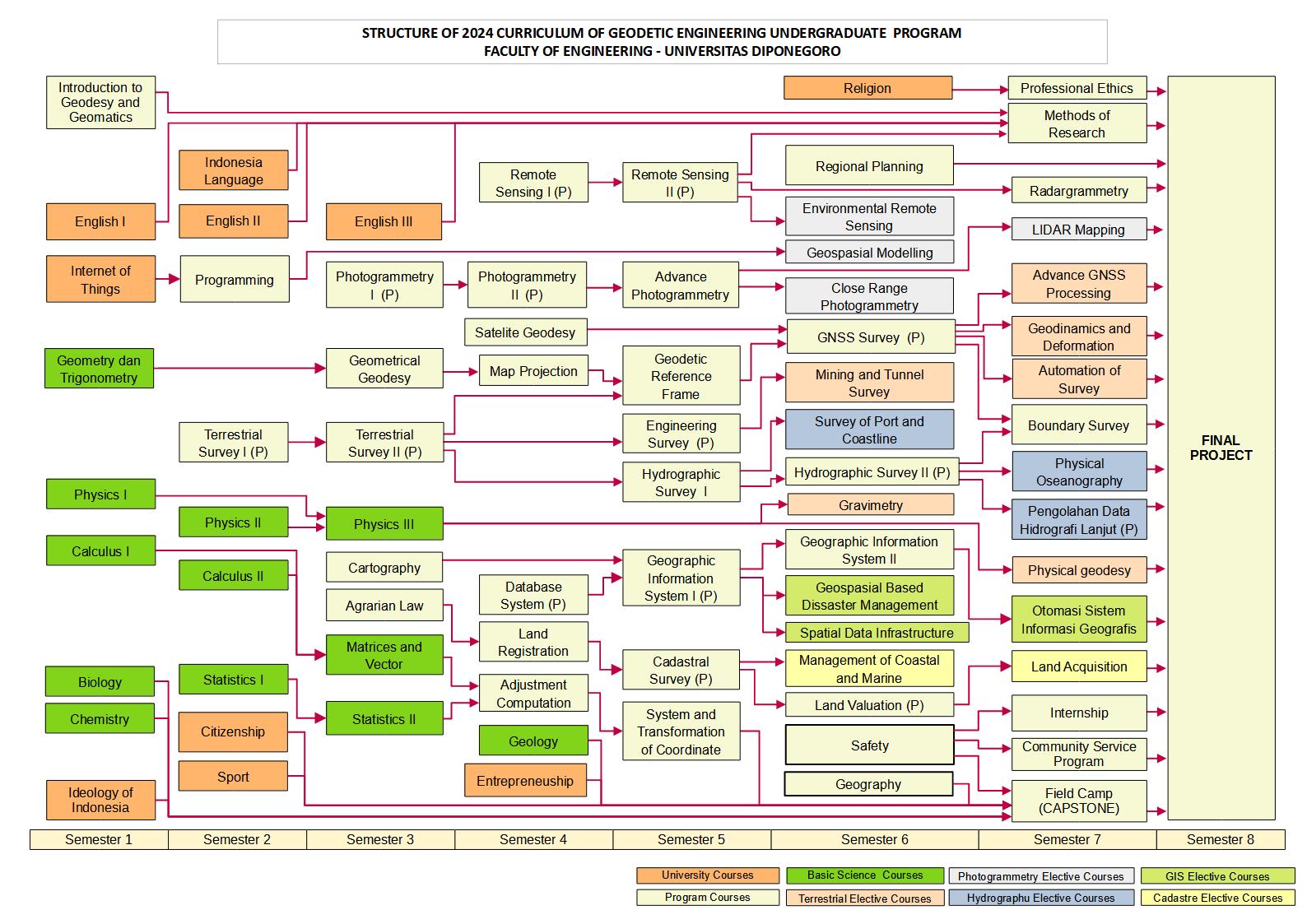
Charles Darwin, in the 18th century, famously stated “It is not the most intellectual of the species that survives; it is not the strongest that survives; but the species that survives is the one that is able best to adapt and adjust to the changing environment in which it finds itself. Inspired by this quote, the Geodetic Engineering Program of Universitas Diponegoro was swiftly adjusting its curriculum to address contemporary issues. The new curriculum – which was originally to be implemented in 2025 – will be accelerated in implementation in the new academic year 2024/2025. Curriculum of 2024 workshop which was held in Bandungan, Semarang Regency from 20 to 21 April 2024 was attended by all lecturers and educational staff from the Department of Geodetic Engineering of Universitas Diponegoro
Under the theme ” Excalation of 2024 Curriculum Competencies based on Outcome Based Education (OBE) in the field of Disaster and Cadastral,” the workshop commenced with an address from Dr. L. M. Sabri, S.T., M.T., the Head of the Geodetic Engineering Department at Diponegoro University. Dr. Sabri emphasized the necessity of developing an outcome-based curriculum rather than one solely focused on content. He urged all lecturers to consistently implement this approach to ensure that graduates meet the Independent Professional Profile outlined by the Geodetic Engineering undergraduate study program, known as PRECISE (Problem Solver, Responsible, Entrepreneur, Collaborative, Innovative, Skillful, Educator).
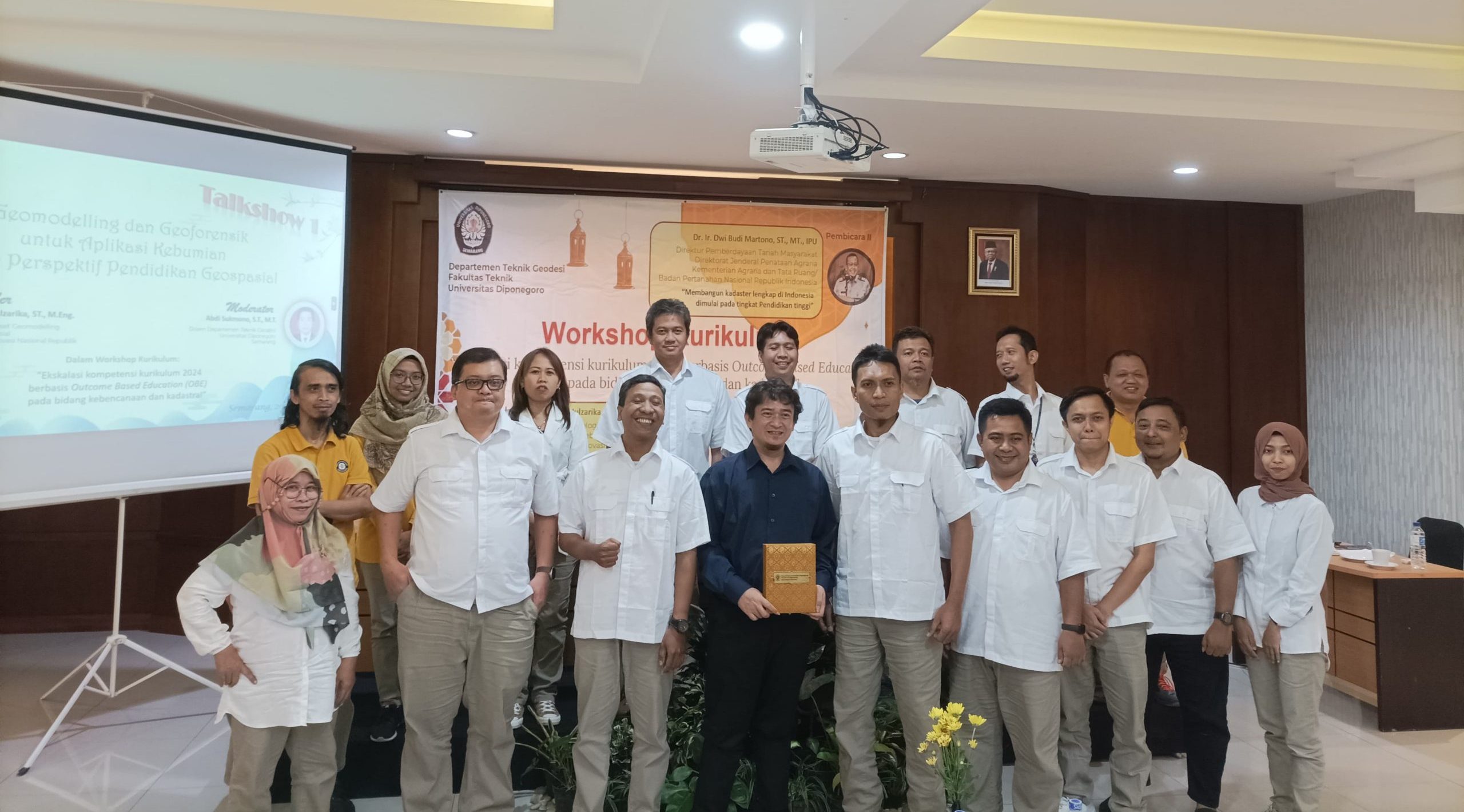
The first day of the event featured a presentation by Dr. Atriyon Julzarika, S.T., M.Eng from the National Research and Innovation Agency (BRIN). Dr. Julzarika, who in 2007 previously taught at Undergraduate Geodestic Engineering Study Program, discussed “Geomodeling and Geoforensics for Earth Applications in a Geospatial Education Perspective.” He underscored the importance of producing geodesy graduates with problem-solving, collaborative, and innovative skills.
On the second day, Arwan Putera Wijaya, S.T., M.T., chaired discussions regarding changes in course composition from the 2020 curriculum to the 2024 curriculum. One significant outcome of the workshop was the decision to require students in the Geodetic Engineering program at Diponegoro University to complete 148 credits, comprising 142 credits of compulsory courses and 4 credits of elective courses of 32 elective credits. It is anticipated that the implementation of the 2024 curriculum will further enhance the competency of graduates from Diponegoro University’s Geodetic Engineering program, enabling them to play a more substantial role in the geospatial domain.